Razor Clamming Basics
Start here if you are new to razor clamming. This page covers the basic equipment, planning, and beach habits that make a first trip easier.
Razor Clamming Basics
New to razor clamming? Learn what Pacific razor clams are, where they're found, how to spot them in the sand, and the basic gear and techniques you'll need to start digging on the Washington coast.
* Razor Clamming Family Limit - Long Beach
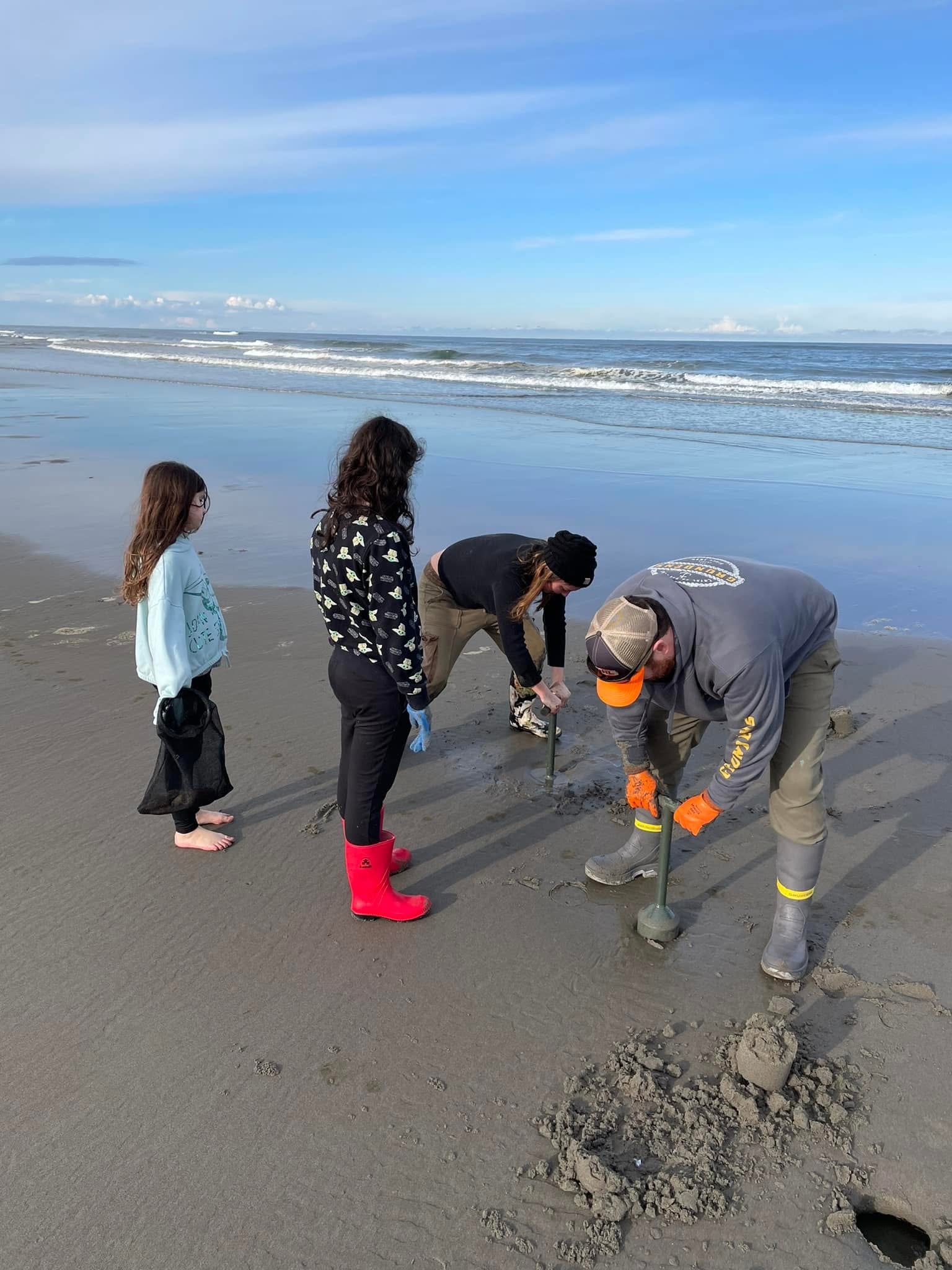
* Kids under 15 do not need a separate Clamming License as long as they are digging with an Adult with a valid license. (check your local regs)
What Is Razor Clamming?
Razor clamming is the process of finding and digging Pacific razor clams from the sandy beaches of the Washington coast. Unlike clams that are collected from exposed rocks or shallow water, razor clams live buried beneath the sand and have to be located before they can be dug.
That's what makes razor clamming so much fun. You aren't simply walking down the beach picking up clams—you have to learn how to find them.
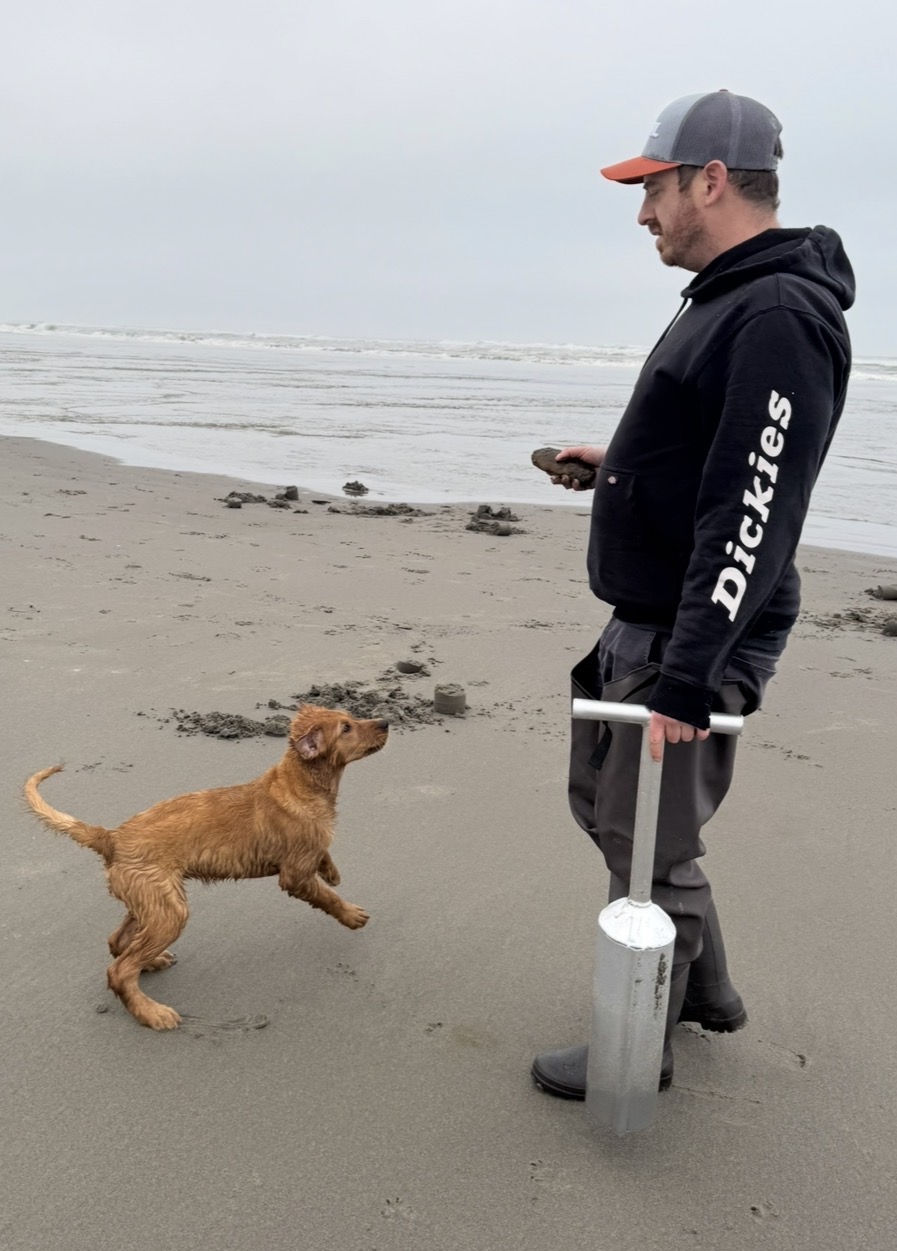
Diggers search the wet sand for small signs called clam shows. Once a show is found, a clam gun or specialized clam shovel is used to reach the clam beneath the surface.
Razor clamming is accessible to beginners, families, and experienced diggers alike. You don't need a boat or complicated equipment, and learning the basics doesn't take long.
The biggest things to understand before your first trip are where you're allowed to dig, when the beach is open, how to recognize a clam show, and how to safely retrieve the clam.
What Is a Pacific Razor Clam?
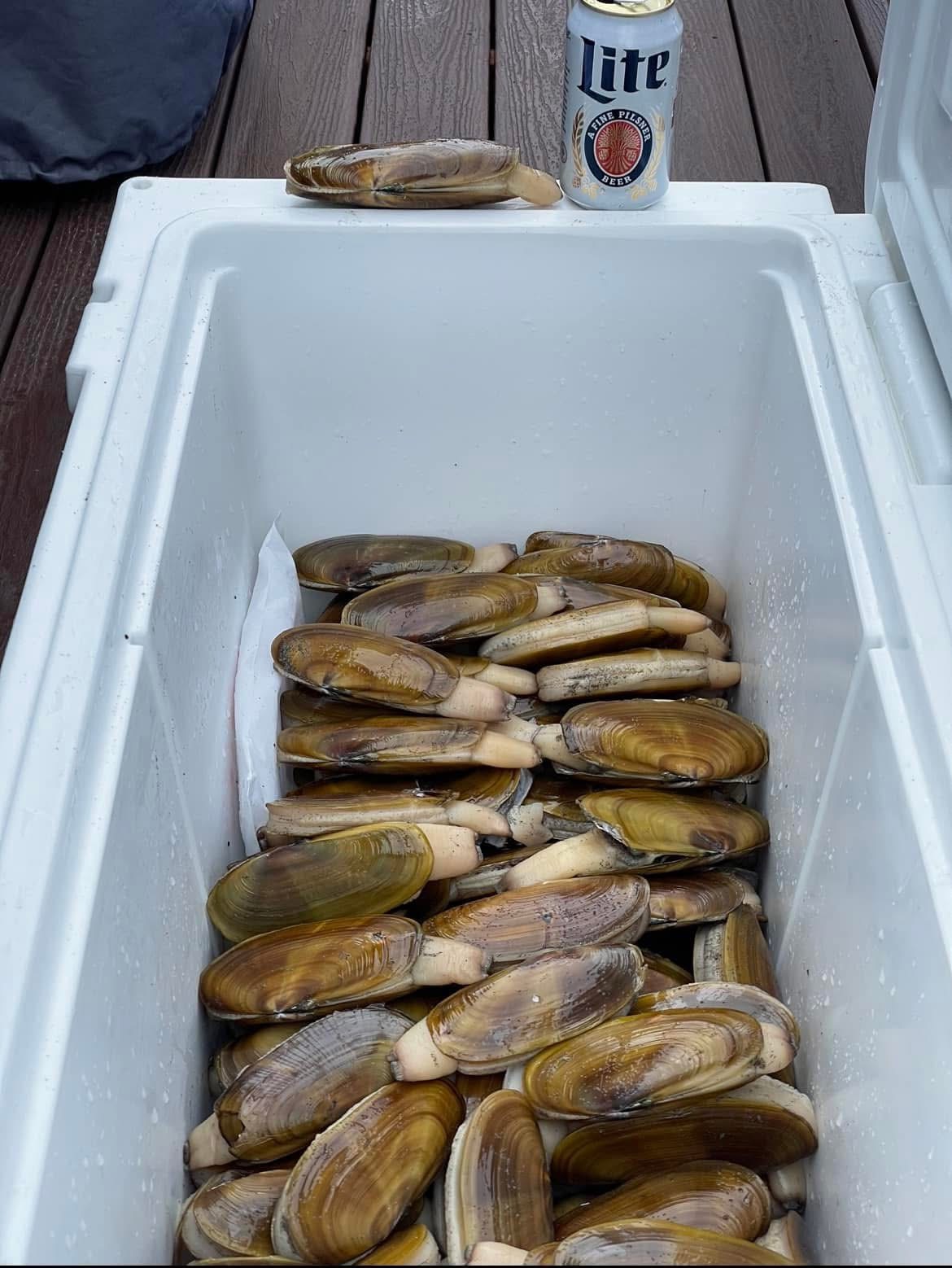
The Pacific razor clam is a large, elongated clam found along sandy beaches of the Pacific Northwest. In Washington, razor clams are especially well known because of the recreational digging opportunities along the outer coast.
Razor clams get their name from their long, narrow shells, which resemble the shape of an old-fashioned straight razor.
Unlike clams that remain close to the surface, razor clams can burrow quickly through wet sand. When they sense vibration or movement above them, they can begin moving deeper—which is one reason digging technique matters.
A razor clam usually isn't visible when you're walking along the beach. Instead, you'll look for subtle disturbances in the sand that reveal where a clam is buried.
Once you learn to recognize those signs, an ordinary stretch of wet sand starts looking very different. Small dimples and holes that you might have ignored before can suddenly reveal where razor clams are hiding underneath.
Where Do Razor Clams Live?
Pacific razor clams live beneath the sand along the outer coast, typically in broad, sandy beach areas that are exposed as the tide moves out.
In Washington, recreational razor clamming is centered around five major coastal management beaches:
- Long Beach — Miles of sandy beach along the Long Beach Peninsula.
- Twin Harbors — A large digging area along the southwest Washington coast.
- Copalis — A popular central-coast razor clam area that includes beaches near Ocean Shores and Copalis.
- Mocrocks — A productive digging area farther north around Pacific Beach and Moclips.
- Kalaloch — The northernmost of Washington's five major razor clam management beaches, along the Olympic Peninsula coast.
Razor clams spend most of their time buried beneath wet sand. As the tide goes out, more of their habitat becomes accessible to diggers.
That doesn't mean every stretch of exposed sand will hold the same number of clams. Razor clams can be concentrated in particular areas, and productive spots can change with beach and ocean conditions.
Beginner tip: When you arrive at an open beach, pay attention to where other diggers are successfully finding clams. You don't need to crowd them, but their location can give you a good idea of which part of the beach is currently productive.
Long Beach
Explore razor clamming at Long Beach, including beach access, tides, dig information, conditions, and trip-planning tips.
Twin Harbors
Plan a razor clamming trip to Twin Harbors with beach access, tide information, digging conditions, and helpful planning tips.
Copalis
Explore Copalis razor clamming with information about beach access, tides, digging conditions, and planning your trip.
Mocrocks
Plan your Mocrocks razor clamming trip with information about beach access, tides, conditions, and digging along the north coast.
Kalaloch
Explore razor clamming at Kalaloch with beach information, tides, conditions, access details, and trip-planning resources.
What Is a Clam Show?
A clam show is a small disturbance in the sand that can reveal where a razor clam is buried. Learning to recognize clam shows is one of the most important skills in razor clamming.
Clam shows aren't always identical. Depending on the sand, moisture, and the clam's position below the surface, you might see:
- A small dimple — A shallow depression in otherwise smooth sand.
- A small hole — Sometimes called a keyhole because of its shape.
- A slight mound or disturbance — Sand that looks different from the surrounding surface.
- A show that appears after disturbing the sand — Stomping, tapping, or pounding the sand nearby can sometimes cause a clam to reveal its location.
At first, you'll probably investigate plenty of marks that don't contain razor clams. That's normal. The more time you spend digging, the easier it becomes to distinguish a real clam show from random holes and depressions in the sand.
When you find a promising show, remember that the clam is buried underneath it and may begin moving deeper when it senses vibration. Once you've identified a show, get your clam gun or shovel into position and be ready to dig.
Beginner tip: Don't wait until you're certain every mark is a clam before digging. Checking questionable shows is one of the fastest ways to train your eyes to recognize the real thing.

A razor clam show can appear as a small hole, dimple, or disturbance in the wet sand.
- Dimple — A shallow depression in the sand; often subtle and easy to walk past.
- Doughnut — A depression with a noticeably raised rim around the outside.
- Keyhole — A more defined opening, sometimes hourglass-shaped; WDFW notes this is often seen in drier sand.
How Are Razor Clams Dug?
Once you've found a clam show, the next step is getting the clam out of the sand. Most Washington diggers use either a clam gun or a specialized clam shovel.
Whichever tool you use, the goal is to work quickly and carefully. Razor clams can begin burrowing deeper when they sense vibration, so once you've identified a good show, position your tool and start digging.
Beginner tip: Don't worry if you miss a few clams at first. Learning where the clam sits beneath the show—and how quickly it moves—gets easier with practice.
Clam Gun or Clam Shovel?
Both clam guns and clam shovels are effective for digging razor clams. The best choice depends on how you prefer to dig, but many beginners find a clam gun easier to learn.
| Feature | Clam Gun | Clam Shovel |
|---|---|---|
| How it works | Removes a plug of sand around the clam | Digs alongside the clam |
| Learning curve | Generally easier for beginners | Requires more technique |
| Weight | Typically heavier | Typically lighter |
| Digging style | Removes sand around the clam show | Works beside and underneath the clam |
| Shell damage | Technique still matters | Care is needed to avoid striking the shell |
| Good first choice? | Often a good beginner option | Good for learning traditional shovel technique |
When Can You Dig Razor Clams in Washington?
Razor clam digging in Washington isn't open every day. The state announces specific approved dig dates for designated coastal beaches.
A favorable low tide does not mean a razor clam beach is open. Before heading to the coast, always confirm the approved dig date, open beach, current regulations, and conditions.
Dig schedules can change, so check the latest information before every trip.
What Do You Need to Start Razor Clamming?
You don't need a lot of specialized equipment to start razor clamming. A few basic pieces of gear will get you onto the beach and digging.
For your first razor clam trip, bring:
- Clam gun or clam shovel — You'll need one of these tools to retrieve clams from beneath the sand.
- Clam bag or bucket — Keep your catch secure, separate, and easy to carry.
- Waterproof boots or waders — Expect wet sand, shallow water, and changing coastal conditions.
- Warm, weatherproof clothing — Washington's coast can be cold, windy, and wet.
- Headlamp or flashlight — Many approved digs take place around evening low tides.
- Gloves — Keep your hands warmer while handling wet equipment.
- Cooler — Keep your catch cool for the trip home.
- Shellfish license — Make sure you have the appropriate current Washington license before harvesting.
You don't need to buy the most expensive equipment when you're getting started. Begin with simple, reliable gear and upgrade later if razor clamming becomes something you do regularly.
Beginner tip: Pack your gear before leaving home and keep an extra set of dry clothes in your vehicle. Dry socks and clothes feel pretty good after a cold, wet dig.
Now that you know the basics, take the next step with our complete beginner's guide. We'll walk you through planning your trip, choosing a beach, understanding tides, finding clam shows, digging your first clam, and bringing your catch home.
Start With the Basics, Then Get on the Beach
Razor clamming can look complicated before your first trip, but the basic process is actually pretty simple:
- Find an approved dig and confirm which beaches are open.
- Check the low tide and arrive early enough to get ready before the best digging period.
- Bring the right gear, including a clam gun or shovel, waterproof clothing, and your own clam container.
- Look for clam shows in the exposed wet sand.
- Dig carefully and learn from each clam you find—or miss.
- Follow the current regulations and keep track of your own catch.
You don't need to master everything before heading to the coast. Your ability to spot shows, position your digging tool, and understand the beach will improve quickly once you start doing it yourself.
From here, explore the more detailed guides on ClammingHQ to learn specific digging techniques, identify razor clams, understand current rules and limits, choose your gear, and plan your next trip.
The best way to learn razor clamming is to understand the basics, prepare properly, and then go dig.