How to Dig Razor Clams
Learn how to dig razor clams on Washington beaches, from spotting a clam show to using a clam gun or shovel and safely retrieving your razor clam from the sand.
Long Beach is one of Washington's most popular razor clamming destinations, offering miles of wide, sandy Pacific coastline and easy access from communities throughout the Long Beach Peninsula.
Whether you're planning your first razor clam dig or have been coming to the coast for years, Long Beach offers a great combination of productive clamming beaches, vehicle access, lodging, restaurants, and nearby places to pick up licenses and gear.
This guide covers where to dig, how to access the beach, where to stay, local supplies, and what you should know before heading to Long Beach for a razor clam opener.
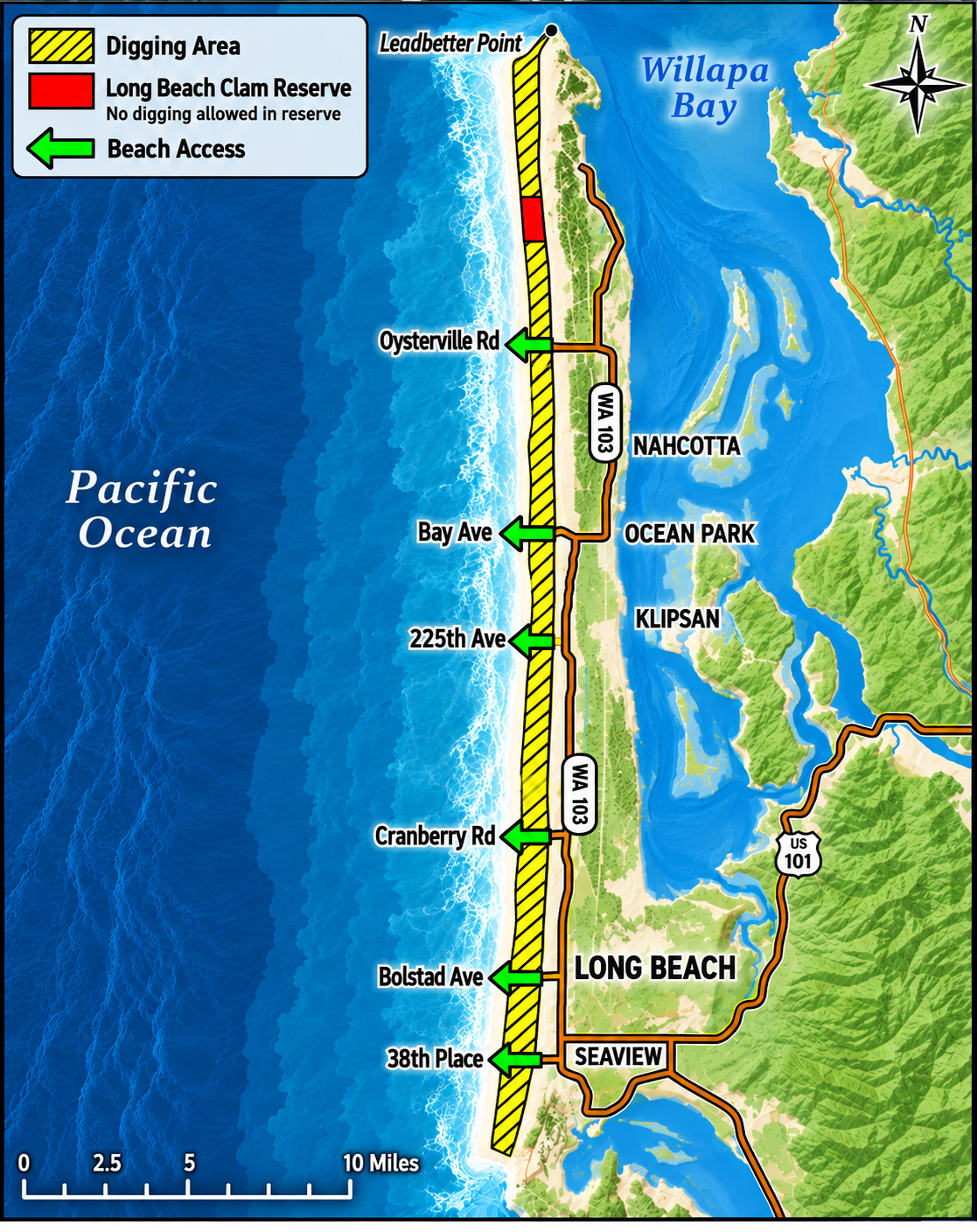
The Long Beach razor clam area offers miles of sandy shoreline, so you don't have to dig directly in front of downtown Long Beach. When the management area is open, clammers spread out along the peninsula to find convenient access and less crowded stretches of beach.
Popular access areas can be found around Seaview, Long Beach, Klipsan Beach, Ocean Park, and farther north along the peninsula. Which access point works best often depends on where you're staying, beach conditions, and how busy a particular dig is.
Several approaches along the Long Beach Peninsula provide access to the beach. Some allow vehicle access when conditions and regulations permit, while others are better suited for parking nearby and walking onto the sand.
If you drive onto the beach, remember that Washington's ocean beaches are treated as state highways in areas open to vehicles. Follow posted speed limits, watch carefully for pedestrians and children, and stay on firm, established travel areas whenever possible.
You don't need to crowd around a single access point. Once you're on the beach, look for suitable clam shows and consider moving away from heavily concentrated groups of diggers. Razor clams are distributed along large stretches of the Long Beach management area.
Tip: Arrive early enough to park, get your equipment ready, and locate a productive stretch of beach before the best part of the low-tide window.
Long Beach is one of Washington's primary razor clam management areas and is a popular choice for both new and experienced diggers. Its long, relatively flat shoreline provides plenty of room to spread out during scheduled razor clam openings.
The best digging generally takes place around the low tide. Many clammers arrive one to two hours before low tide and begin searching as the water recedes and more beach becomes exposed.
Walk the exposed sand and watch for a razor clam “show” — a small hole, dimple, or depression that can indicate a clam beneath the surface. Stomping your foot or tapping the sand nearby can sometimes cause a clam to move and make its show easier to spot.
Once you find a show, work quickly with a clam gun or shovel. Razor clams can dig surprisingly fast, so proper technique makes a big difference.
Don't choose your digging time based only on the date of an opening. Check the scheduled low tide time and tide height before leaving for the beach, and give yourself enough time to reach your access point before the prime digging window.
New to razor clamming? Our step-by-step digging guide explains how to identify a clam show and use both clam guns and clam shovels.
A valid Washington fishing or shellfish license is required for razor clamming at Long Beach for anyone age 16 or older. Children age 15 and younger do not need a license.
Washington offers several license options that include razor clam harvesting, so occasional visitors can choose a short-term option while frequent clammers may prefer an annual license.
Purchase your license before the dig whenever possible. Keep your license available while clamming and make sure everyone in your group who is required to have one has their own valid license.
Licenses can be purchased through the Washington Department of Fish & Wildlife or from authorized license dealers. There are also businesses on and around the Long Beach Peninsula where fishing and shellfish licenses may be available.
Remember: A fishing license does not guarantee that razor clamming is open. Always confirm the current WDFW razor clam opening and regulations before digging.
The Long Beach Peninsula has plenty of lodging options for razor clammers, ranging from hotels and motels to vacation rentals, RV parks, and campgrounds. Staying on the peninsula can make early-morning or evening digs much easier because you'll already be close to the beach.
Long Beach and Seaview are convenient choices if you want to be close to restaurants, shops, groceries, and multiple beach access points. This area also provides a good central base for exploring the southern portion of the peninsula.
Farther north, Ocean Park and the communities around Klipsan Beach provide another good base for a clamming trip. These areas can be especially convenient if you plan to access beaches farther north on the peninsula.
Razor clam openings can bring a large number of visitors to the peninsula, particularly when favorable tides fall on a weekend. Hotels, vacation rentals, and campgrounds can fill quickly after dig dates are announced.
Tip: If you're planning an overnight trip, look for lodging with an outdoor rinse area or easy access to a hose. Being able to rinse sand from clam guns, shovels, boots, and other gear before packing up is extremely useful.
You don't need much equipment to razor clam at Long Beach, but having the right gear can make a cold, wet dig considerably more comfortable.
If you forget something, Long Beach and other communities on the peninsula have stores where basic outdoor, fishing, grocery, and beach supplies may be available. Razor clam equipment is often easier to find locally during the digging season.
For the best selection, it's still a good idea to have your clam gun or shovel and other essential equipment before arriving at the beach.
Tip: Bring a bucket or plastic tote for transporting wet and sandy equipment. It makes the trip home much cleaner.
A little preparation can make a Long Beach razor clamming trip much easier, especially during popular weekend digs when thousands of people may be visiting the coast.
Give yourself plenty of time to reach the peninsula, find your beach access, park, and get your gear ready. Arriving before the prime digging window also gives you time to walk the beach and start looking for clam shows as the tide recedes.
Long Beach offers miles of digging area. If the beach near a major access point is crowded, consider moving farther along the shoreline rather than concentrating in one small area.
Conditions on the Washington coast can change quickly. Wind, rain, cold temperatures, and darkness are all common during razor clam season, so bring waterproof layers and a headlamp or flashlight when appropriate.
Never turn your attention completely away from the surf. Keep children nearby, watch for incoming waves, and be especially cautious when digging after dark or when the surf is rough.
Take note of where you entered the beach. Access roads can be surprisingly difficult to identify from the shoreline after walking some distance, particularly at night.
Keep a towel, brush, bucket, or plastic tote in your vehicle for sandy boots and equipment. Long Beach sand has a remarkable ability to come home with you.
Learn how to dig razor clams on Washington beaches, from spotting a clam show to using a clam gun or shovel and safely retrieving your razor clam from the sand.
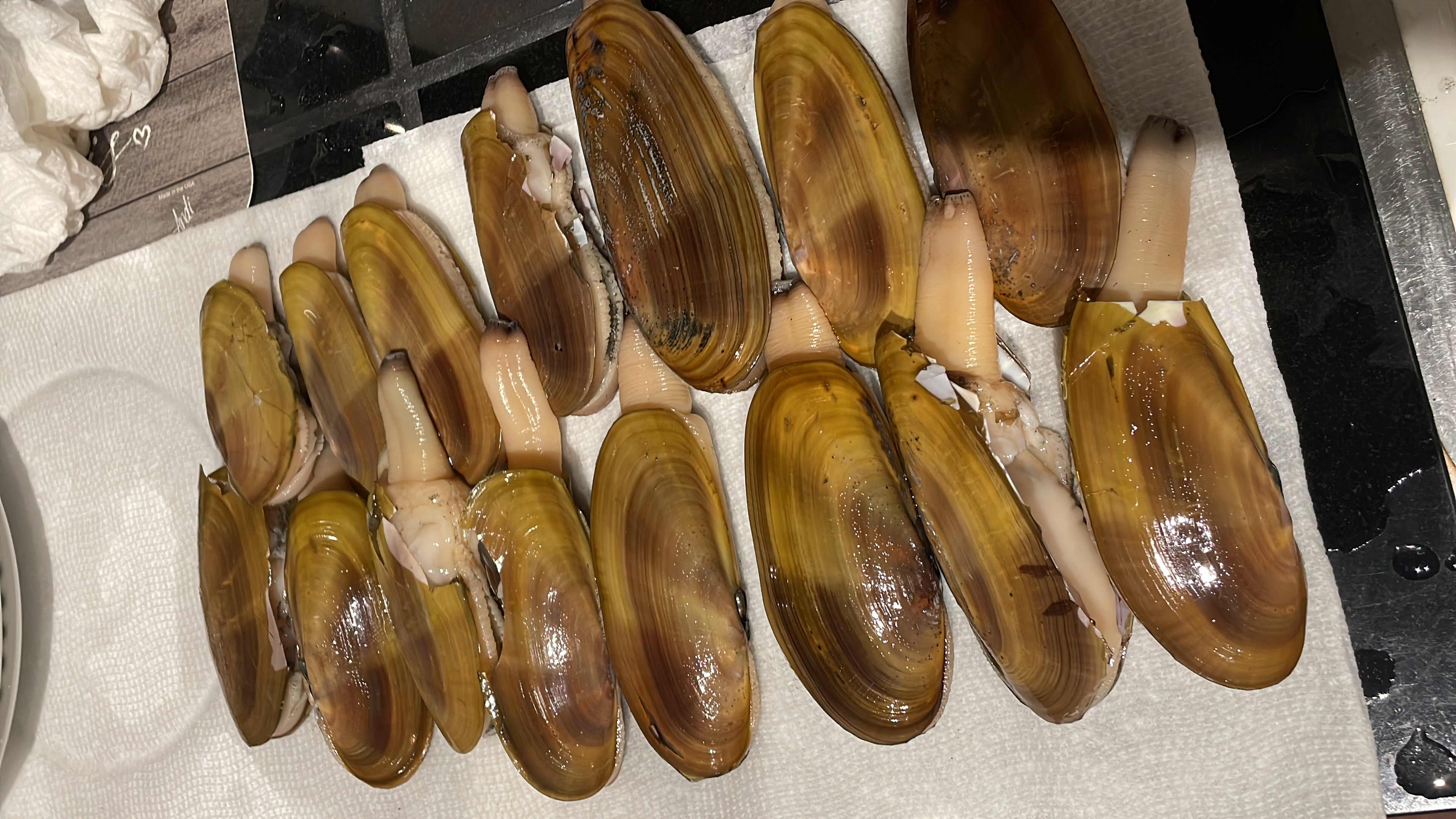
Know the Washington razor clam rules before you dig. Review daily limits, licensing requirements, digging rules, and key WDFW regulations.
Learn how to clean razor clams step by step, including preparing your catch, removing unwanted parts, rinsing the meat, and getting fresh clams ready to cook.
Find upcoming Washington razor clam dig dates, beaches, tides, and opening information. Check the latest scheduled digs and confirm final WDFW approval.